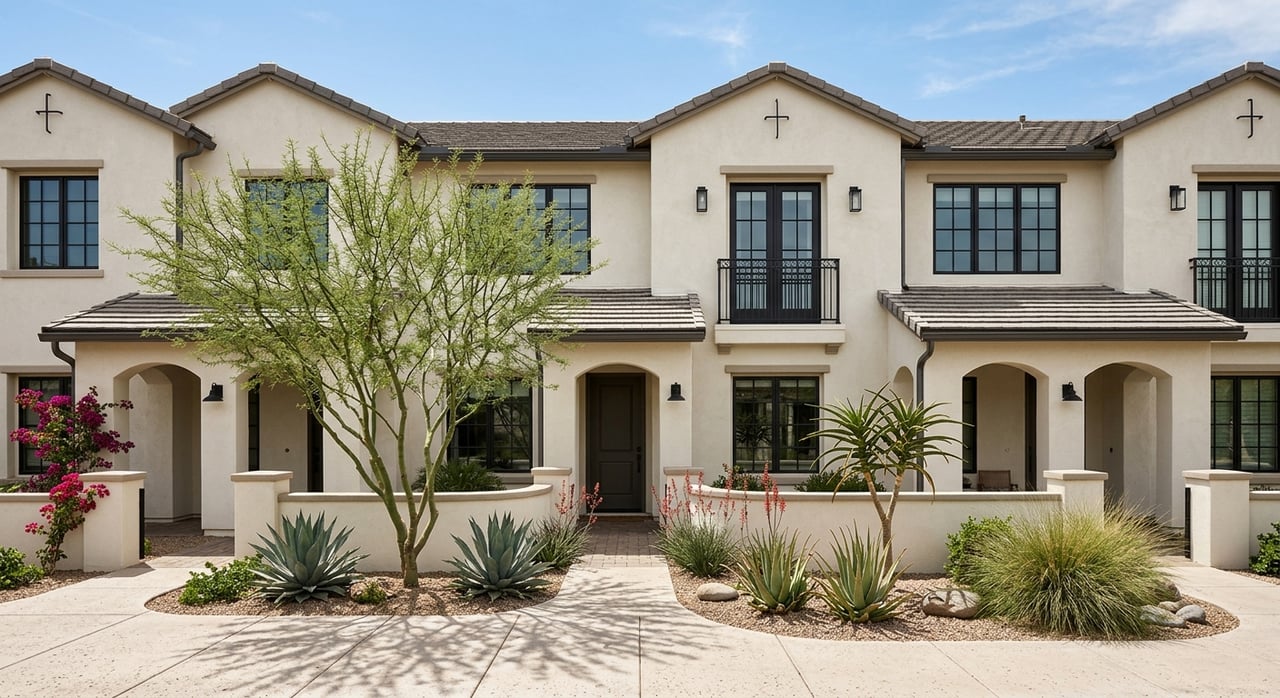
If your workdays are full and your free time matters, the wrong home setup can start to feel like a second job. In Tempe, condos and townhomes both offer a practical path into central, well-connected neighborhoods, but they do not live the same way day to day. If you are weighing convenience, privacy, maintenance, and resale, this guide will help you sort through the tradeoffs with more confidence. Let’s dive in.
Why attached homes work in Tempe
Tempe is one of the stronger places in the Valley to compare condos and townhomes because the city blends jobs, university energy, and transit access in a compact area. Arizona State University’s Tempe campus alone reports 46,476 undergraduates, 8,836 graduate and professional students, and 3,433 faculty members. The City of Tempe also highlights major employers such as ASU, State Farm, SRP, Wells Fargo, and Honeywell.
That concentration of employers and activity supports demand for homes that simplify daily life. Valley Metro rail connects Phoenix, Tempe, and Mesa, and the Tempe Streetcar runs through a three-mile corridor in downtown Tempe. For many busy professionals, that makes attached housing near downtown, ASU, or Tempe Town Lake especially appealing.
Tempe’s spring 2026 market also looked active rather than extreme. Redfin reported a May 2026 median sale price of $482,711 in Tempe with a median 52 days on market, compared with $463,967 and 51 days on market in Phoenix. In other words, your choice between a condo and a townhome will often come down more to lifestyle, HOA setup, and building quality than to a major citywide price split.
Tempe inventory at a glance
Tempe has meaningful inventory in both property types, which gives buyers real options. In late June 2026, Redfin showed 94 condos for sale in Tempe at a median listing price of $395,000 and 122 townhouses for sale at a median listing price of $340,000.
That pricing gap does not mean condos are always more expensive or townhomes are always the value play. Current condo inventory includes higher-priced units near downtown and along the river, which can push the median up. The better question is what you are getting for the monthly cost, the location, and the ownership structure.
Condos and townhomes are not the same legally
This is where many buyers get tripped up. The label on the listing does not always tell you who maintains the roof, exterior, landscaping, or shared systems.
Under Arizona’s Condominium Act, a condo is real estate where some portions are separately owned and the rest are commonly owned by unit owners. The law generally makes the association responsible for common elements, while the owner is responsible for the unit unless the declaration says otherwise.
Townhomes can be different. Arizona’s Planned Communities Act covers developments created to manage, maintain, or improve property and assess members for those purposes, and that law specifically excludes condominiums. So in Tempe, a townhome may function more like a condo project in one community and more like a fee-simple home in another.
That is why the recorded declaration and CC&Rs matter so much. Before you fall in love with a floor plan, you want to know exactly what the HOA covers and what lands on your to-do list and budget.
What maintenance really feels like
For a busy professional, maintenance can be the deciding factor. A condo often fits buyers who want more of a lock-and-leave setup with limited exterior responsibility.
Because condo associations usually handle common elements, your weekly life may involve less attention to exterior upkeep. That can be a strong fit if you travel often, work long hours, or simply want fewer home tasks competing for your time.
A townhome may still be low maintenance, but you should not assume it works the same way. Some communities cover exterior items and landscaping generously, while others place more responsibility on the owner. The practical difference shows up in your budget, your insurance needs, and how much hands-on upkeep comes with ownership.
Amenities, parking, and convenience
Tempe condos often lean into shared amenities and building-level convenience. Current listings have advertised features such as heated pools, fitness centers, BBQ areas, rec rooms, elevator access, underground parking, and even live-work zoning in some downtown locations.
If your goal is convenience, these features can be a major plus. You may give up a private yard, but you gain services and spaces that support a more streamlined lifestyle.
Townhomes can also offer strong amenities, including community pools and attached garages. In many cases, though, the experience feels more like a compact house than a unit in a larger building. That often appeals to buyers who want easy living without giving up direct entry, a little more storage, or a more traditional home layout.
Noise and privacy differences
When buyers say they want “more privacy,” they are usually reacting to the building design, not just the property type. Condos are more likely to have stacked neighbors and shared vertical elements, while townhomes are more likely to sit side by side.
That means a townhome often has fewer upstairs or downstairs neighbor issues. But the label still does not tell the whole story. End units, newer construction, insulated walls, and whether there is a unit above or below you often matter more than whether the listing says condo or townhome.
If noise sensitivity is high on your list, ask practical questions during showings. Pay attention to entry style, shared walls, flooring, stair placement, and where your unit sits within the community.
How ownership costs can differ
Monthly housing cost is more than the mortgage payment. With condos and townhomes, HOA dues and what those dues include should be part of your side-by-side comparison.
A condo with a higher HOA fee may still make sense if it covers substantial exterior maintenance, amenities, insurance components, or shared utilities. A townhome with lower dues may look cheaper at first glance, but if you take on more repair responsibility, the real long-term cost can look different.
There is also a resale paperwork cost to keep in mind. Arizona law requires disclosure packets for condo and planned-community sales, and current statutes allow an aggregate fee of up to $400 for preparing and delivering those documents and related transfer materials.
Insurance is worth a closer look
Insurance is another area where buyers benefit from slowing down and reading the details. Arizona condo insurance law contemplates a master policy for the association, but owner-installed improvements, betterments, and personal property are not necessarily covered by that policy.
That means your personal policy still matters. You want to understand what the HOA insures, what your lender will require, and what gaps could leave you exposed after closing.
Townhome coverage can also vary by community structure and governing documents. This is another reason a quick review of the declaration, budget, and insurance summary can save you from expensive surprises later.
Financing can be more project-sensitive
For many buyers, financing is where the condo-versus-townhome choice gets very real. Condo financing is often more project-sensitive because lenders may evaluate the entire project, not just the unit.
HUD states that FHA insures condo loans only for units in FHA-approved projects or projects that qualify for Single-Unit Approval. Fannie Mae’s condo project standards also focus on issues such as project completion, owner control, phasing, and the project review method.
In practical terms, HOA reserves, insurance, owner-occupancy mix, and special assessments can affect whether a condo is financeable for your loan program. Amenity-heavy townhome communities can also raise similar review questions, so this is never a step to skip.
Resale value depends on the community
Many buyers ask which property type holds value better. In Tempe, the more useful question is usually which specific community is better positioned for resale.
Maricopa County’s 2026 to 2027 median-value report showed a median full cash value of $270,300 for Condo/Townhome parcels, compared with a countywide residential median of $407,800. These are tax valuation figures, not sale prices, but they help explain why attached homes can serve as a more accessible entry point in central, job-rich locations.
For future resale, clean documents and healthy operations matter. Buyers and lenders tend to respond better to communities with stable reserves, clear insurance, transparent records, and no surprise assessments.
When a condo makes more sense
A condo may be the better fit if you want a home that supports a faster pace of life with fewer moving parts.
You may prefer a condo if you value:
- A lock-and-leave lifestyle
- Elevator access or building amenities
- Less exterior maintenance responsibility
- A location near downtown, ASU, or Tempe Town Lake
- Shared amenities instead of private outdoor space
This option can work especially well if convenience and commute efficiency rank higher for you than added separation or extra storage.
When a townhome makes more sense
A townhome may be the better fit if you want some of the ease of attached housing with a little more breathing room.
You may prefer a townhome if you value:
- More privacy than many stacked condo layouts
- Direct entry convenience
- Potentially better parking or storage
- A layout that feels more like a compact house
- A more residential feel while staying close to Tempe job centers
This can be a strong middle ground if you want low-maintenance living but are not ready for the tradeoffs that can come with a larger condo building.
The smartest way to compare options
If you are serious about buying in Tempe, compare each property with the documents and monthly costs in front of you. The strongest choice is usually the one that lines up with your daily routine, not the one with the flashiest listing photos.
Here are the key items to compare:
- Monthly HOA fee
- What the HOA covers
- Whether the community is condominium or planned-community governed
- Reserve strength and budget health
- Insurance structure
- Current or possible special assessments
- Parking and storage setup
- Financing fit for your loan program
- Noise and privacy based on unit position
A well-located condo can be the perfect answer for one buyer, while a townhome in a stable community may be the better long-term fit for another. The details matter more than the label.
If you want help comparing Tempe condos and townhomes in a way that matches your schedule, budget, and long-term plans, reach out to Theresa Krakauer for a personalized market consultation and tailored plan.
FAQs
What is the main difference between a condo and a townhome in Tempe?
- In Tempe, the biggest difference is often the ownership and maintenance structure, not just the label. Condos usually have common elements maintained by the association, while townhome responsibilities can vary by the community’s governing documents.
Are Tempe condos more expensive than Tempe townhomes?
- Not always. In late June 2026, Redfin showed a median listing price of $395,000 for Tempe condos and $340,000 for Tempe townhouses, but condo inventory included higher-priced downtown and river-adjacent units that can raise the median.
Are Tempe condos better for busy professionals?
- They can be, especially if you want a lock-and-leave lifestyle, shared amenities, and less exterior maintenance. The best fit depends on your commute, budget, and comfort with the HOA structure.
Do Tempe townhomes offer more privacy than Tempe condos?
- Often yes, because townhomes are more likely to be side by side rather than stacked. Still, end-unit location, wall insulation, and whether there is a unit above or below you can matter just as much.
What should buyers review before purchasing a Tempe condo or townhome?
- Review the HOA disclosure packet, monthly dues, budget, reserves, insurance, special assessments, restrictions, and whether the community is governed as a condo or a planned community.
Can financing be harder for a Tempe condo than for a townhome?
- It can be. Condo financing is often more project-sensitive because lenders may review the project’s reserves, insurance, owner-occupancy mix, and other factors in addition to the unit itself.